Launch offer — valid today only

📄 Digital book in PDF · read it on your phone or print it

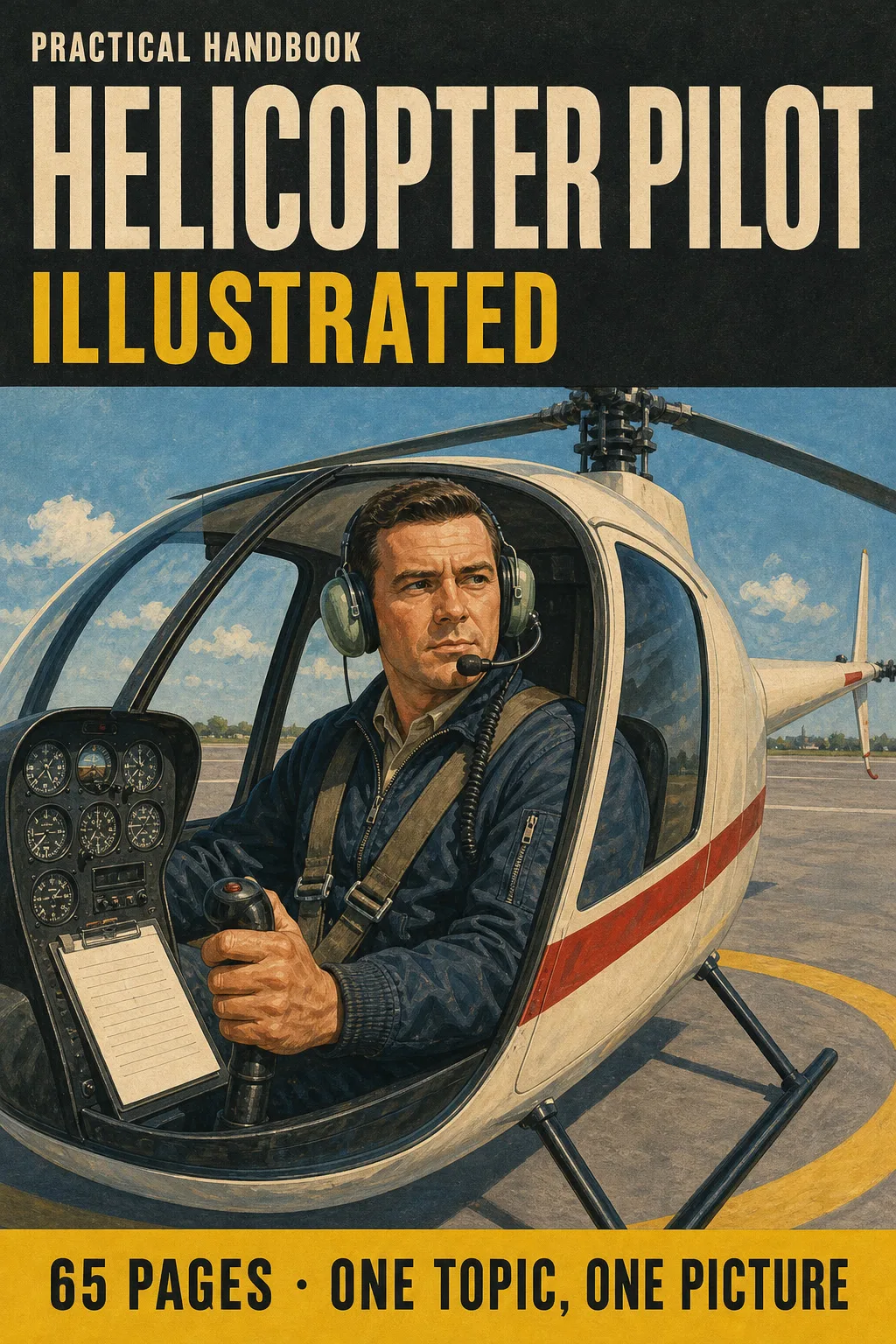
The FAA Rotorcraft Knowledge Tests in Drawings: Every Rotor Concept You Can Picture and Redraw at the Oral One Concept on Every Page

Rotor systems, dissymmetry of lift, blowback, transverse flow, ETL, autorotation, dynamic rollover, settling with power, LTE and weight and balance. Each topic has its own page: the drawing first, then what you need to remember. 65 illustrated pages.

START STUDYING THIS WAY

🔒 Secure checkout · PDF by email · 30-day guarantee

Every topic, its own pageEach rotor phenomenon drawn on the disc, with the explanation right beside it
65 illustrated pages8 parts, from the helicopter's controls to the checkride oral
Up-to-date sourcesFAA Helicopter Flying Handbook, Rotorcraft ACS and 14 CFR
PDF by emailFormat

Look Inside the Book

Every page has one big drawing and a box with the numbers and recovery steps you need to know:

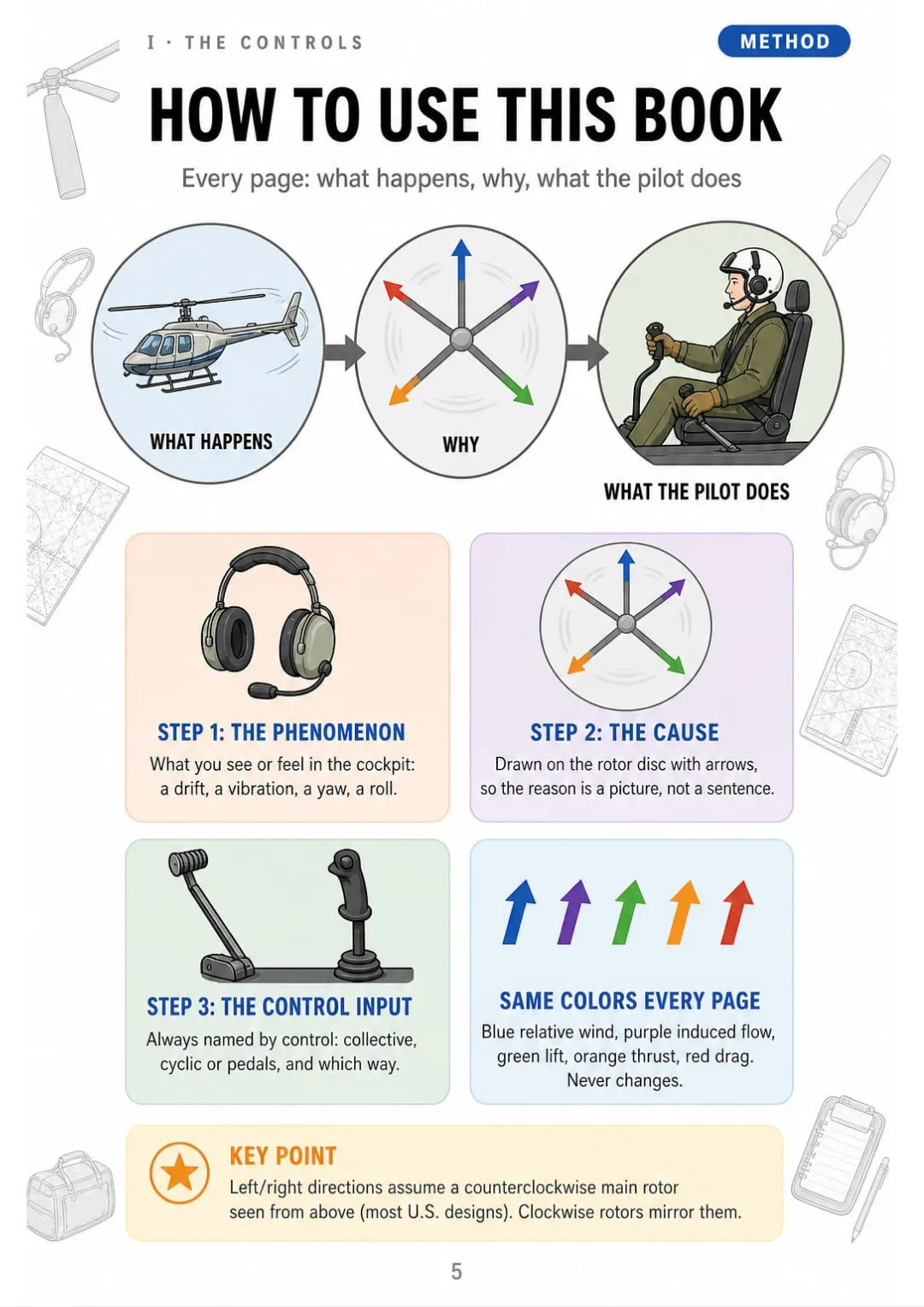
One method on every page: phenomenon → cause on the disc → collective, cyclic or pedals
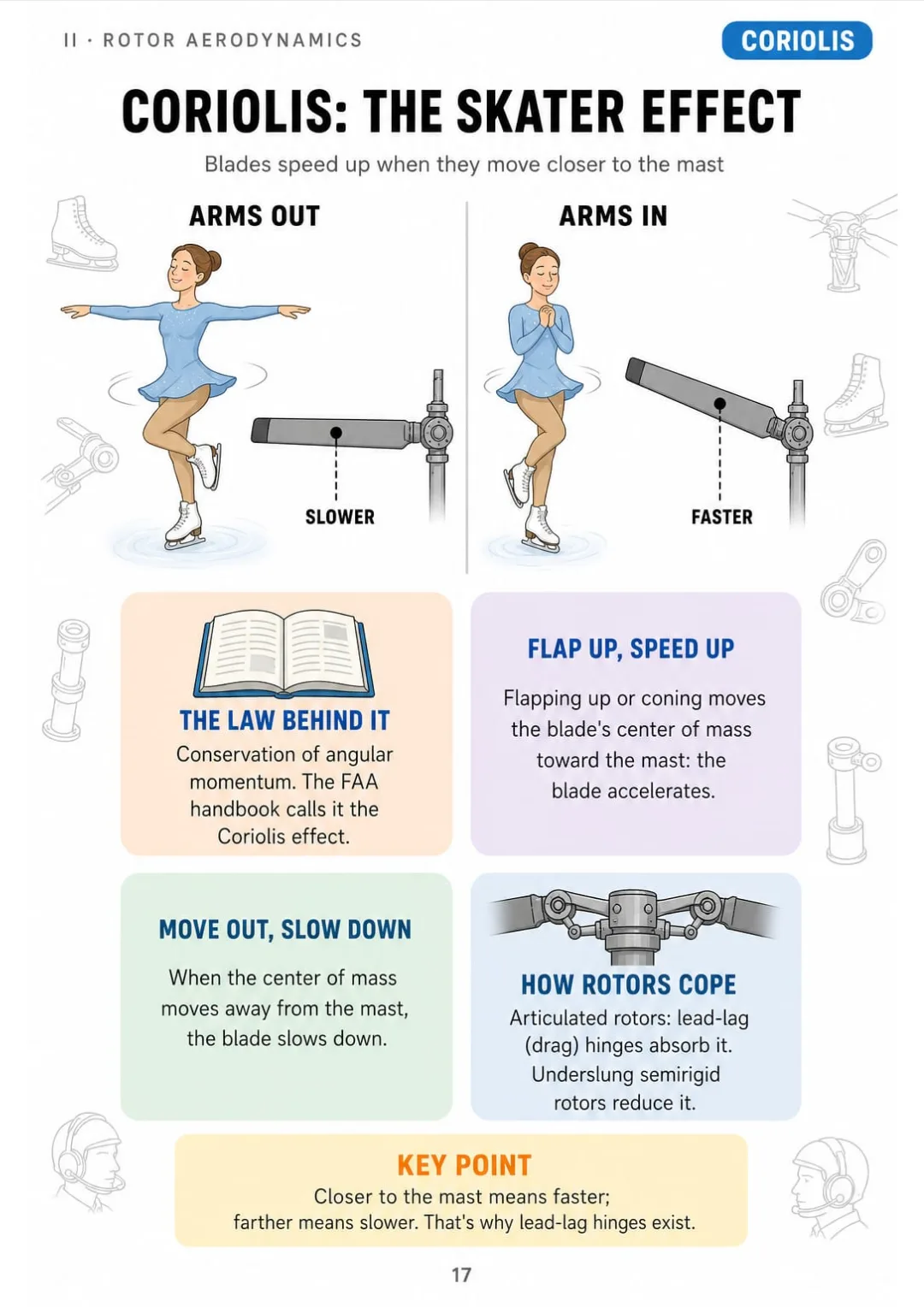
Coriolis effect: blade flaps up, center of mass moves in, blade speeds up.
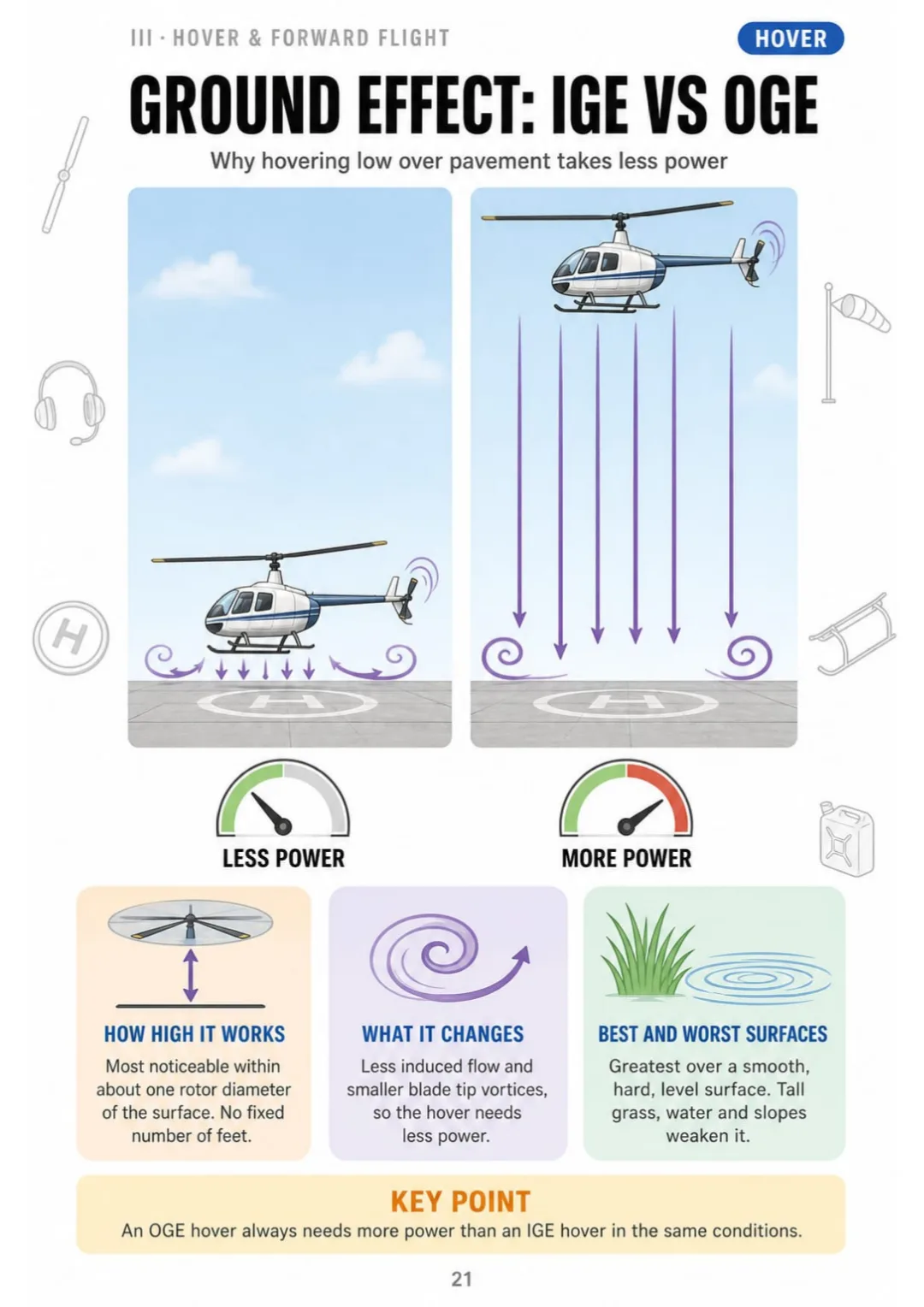
Ground effect: within about one rotor diameter, less induced flow and less power to hover.
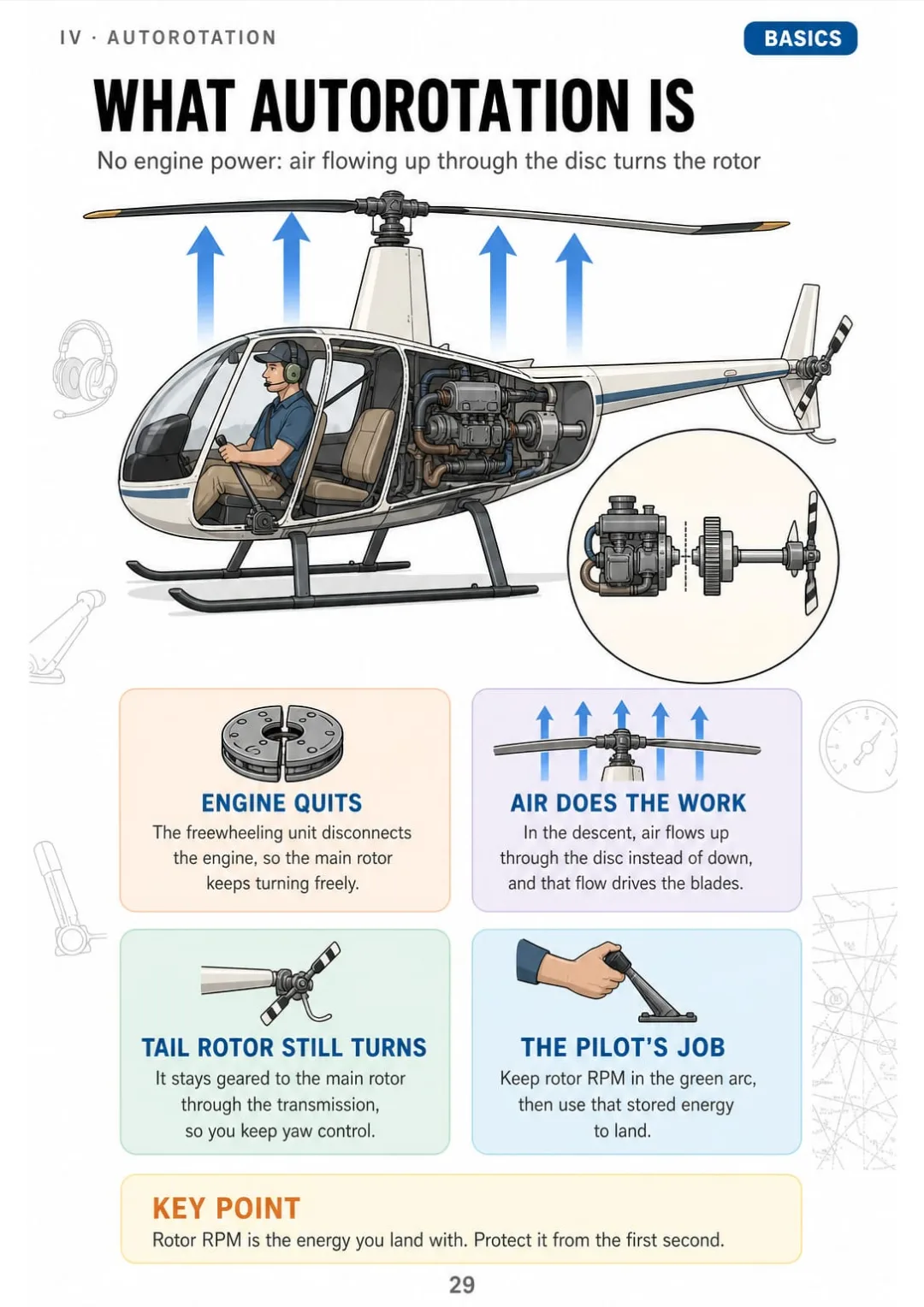
Freewheeling unit disconnects the engine; air flowing up through the disc drives the rotor.
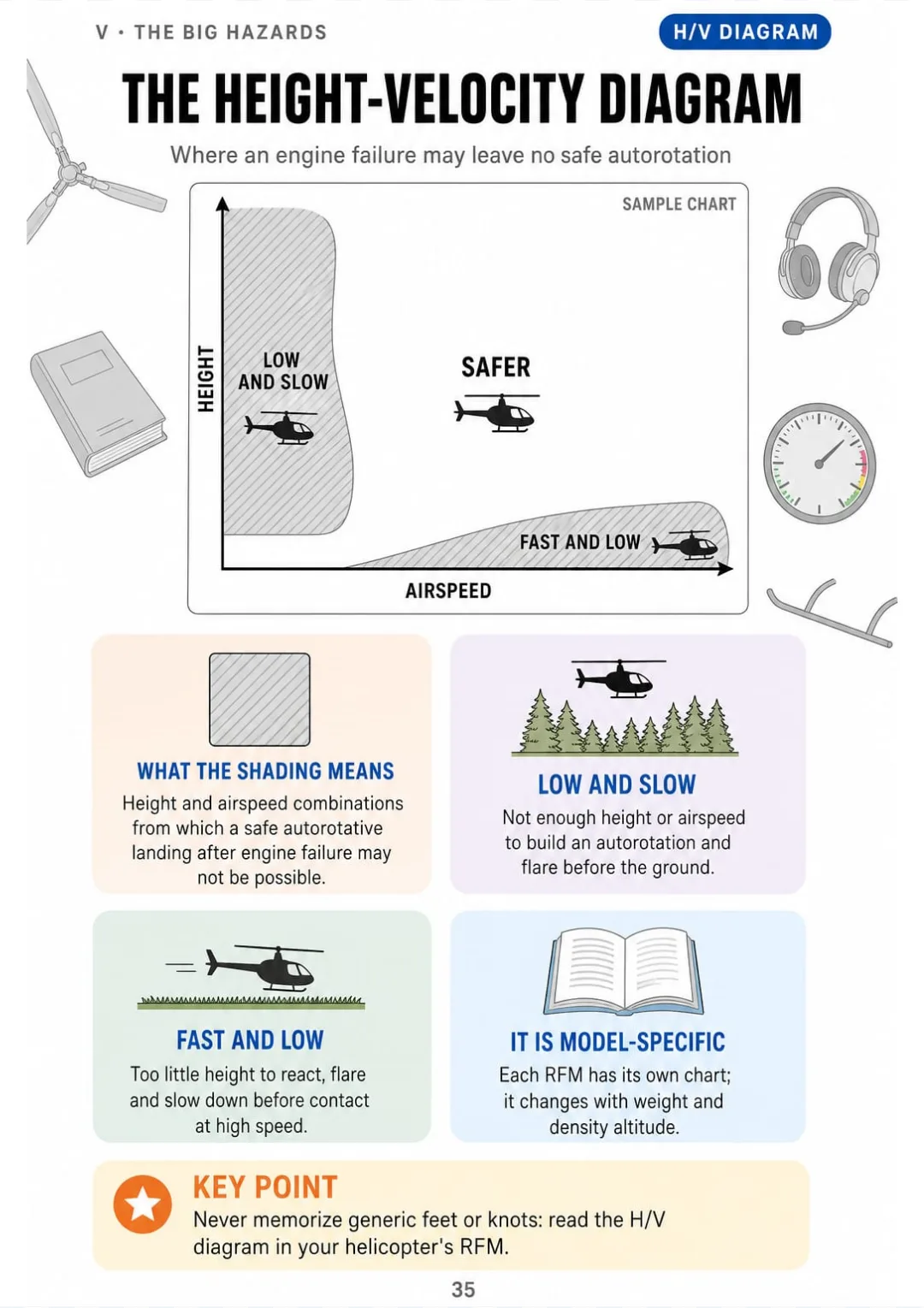
H/V diagram: the shaded areas, low and slow and fast and low, are where autorotation may fail
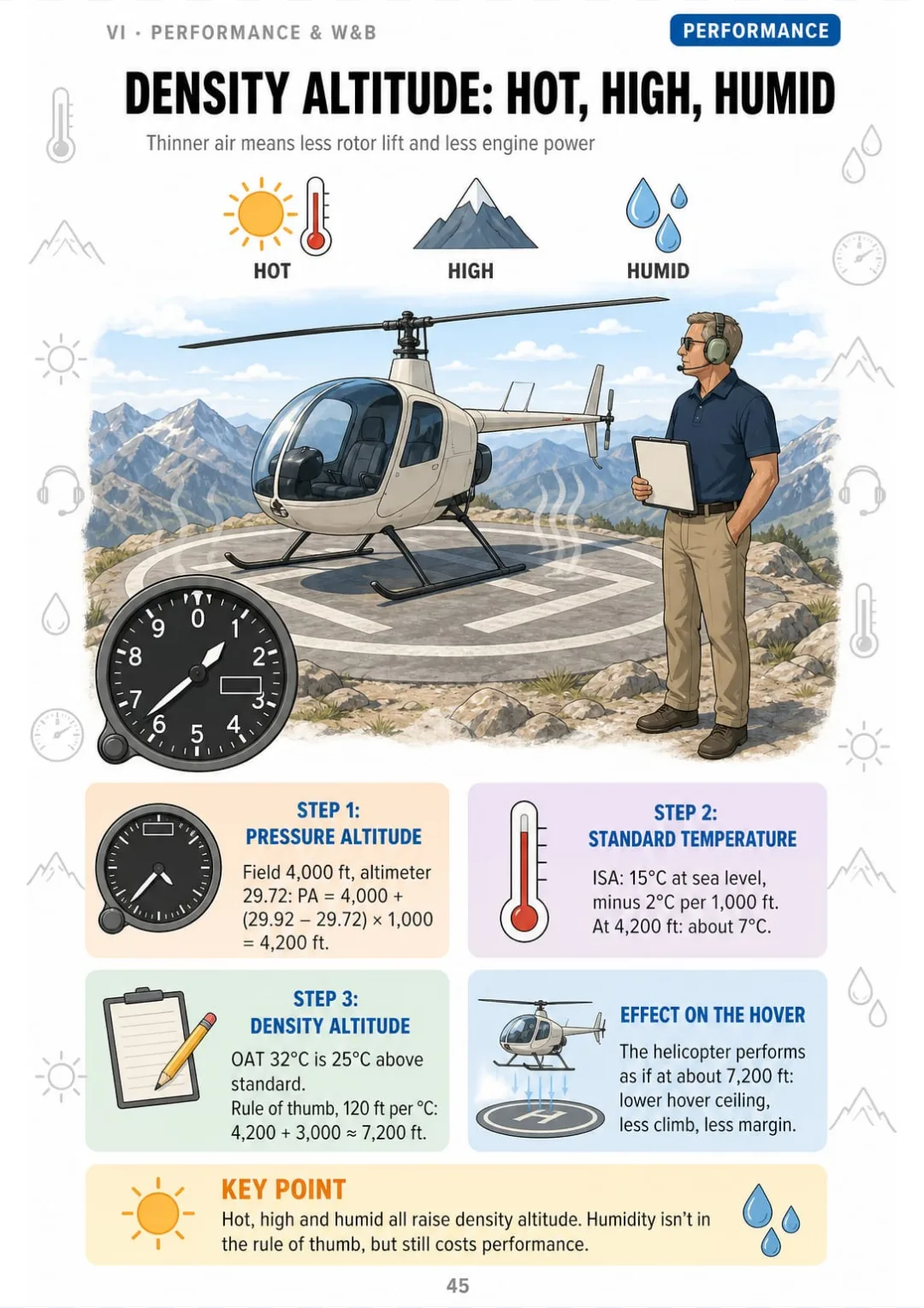
Field 4,000 ft, 29.72, 32°C: density altitude about 7,200 ft, worked in three steps.
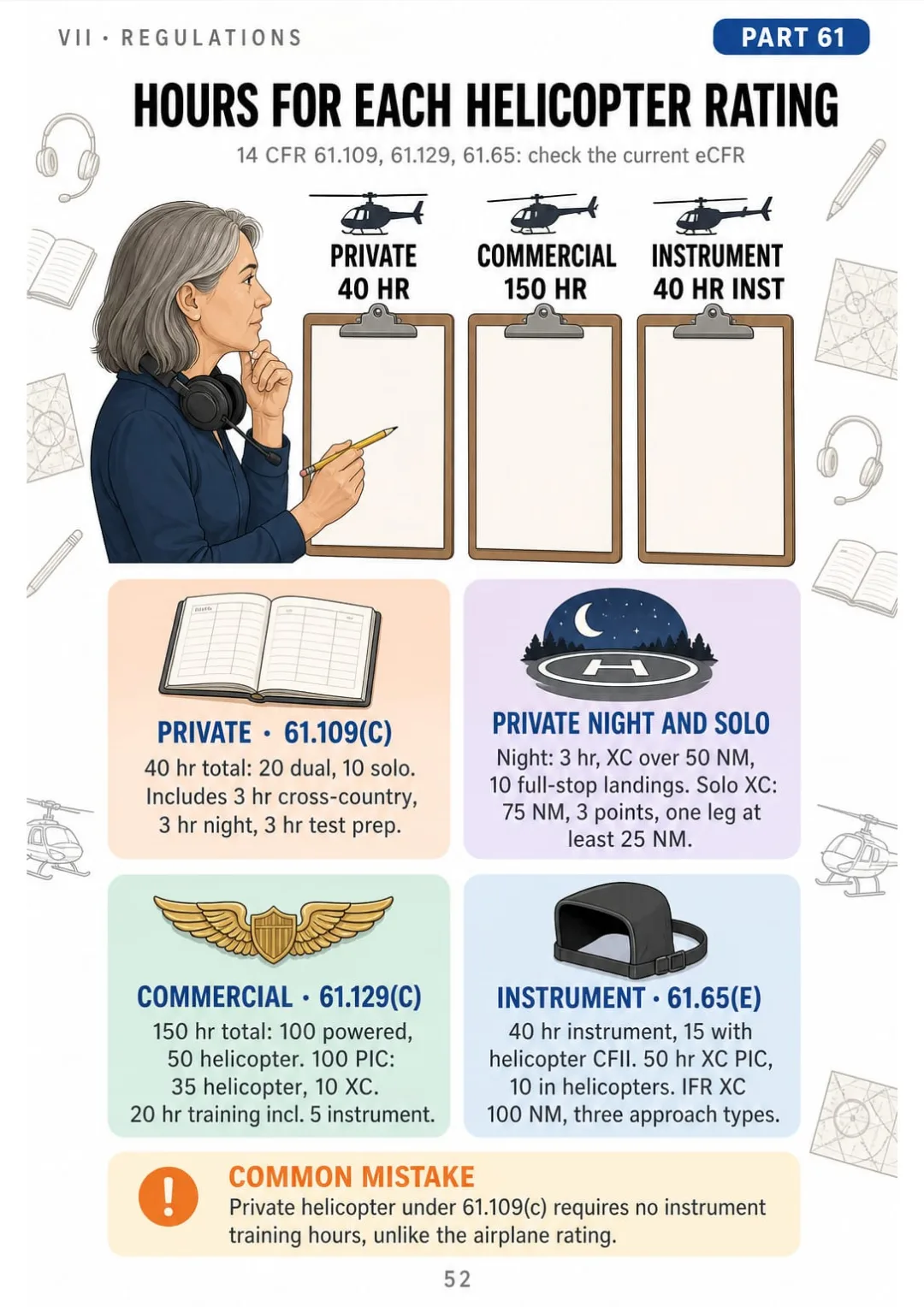
Private 40 hr, Commercial 150 hr, Instrument 40 hr instrument time: the three columns of Part 61.
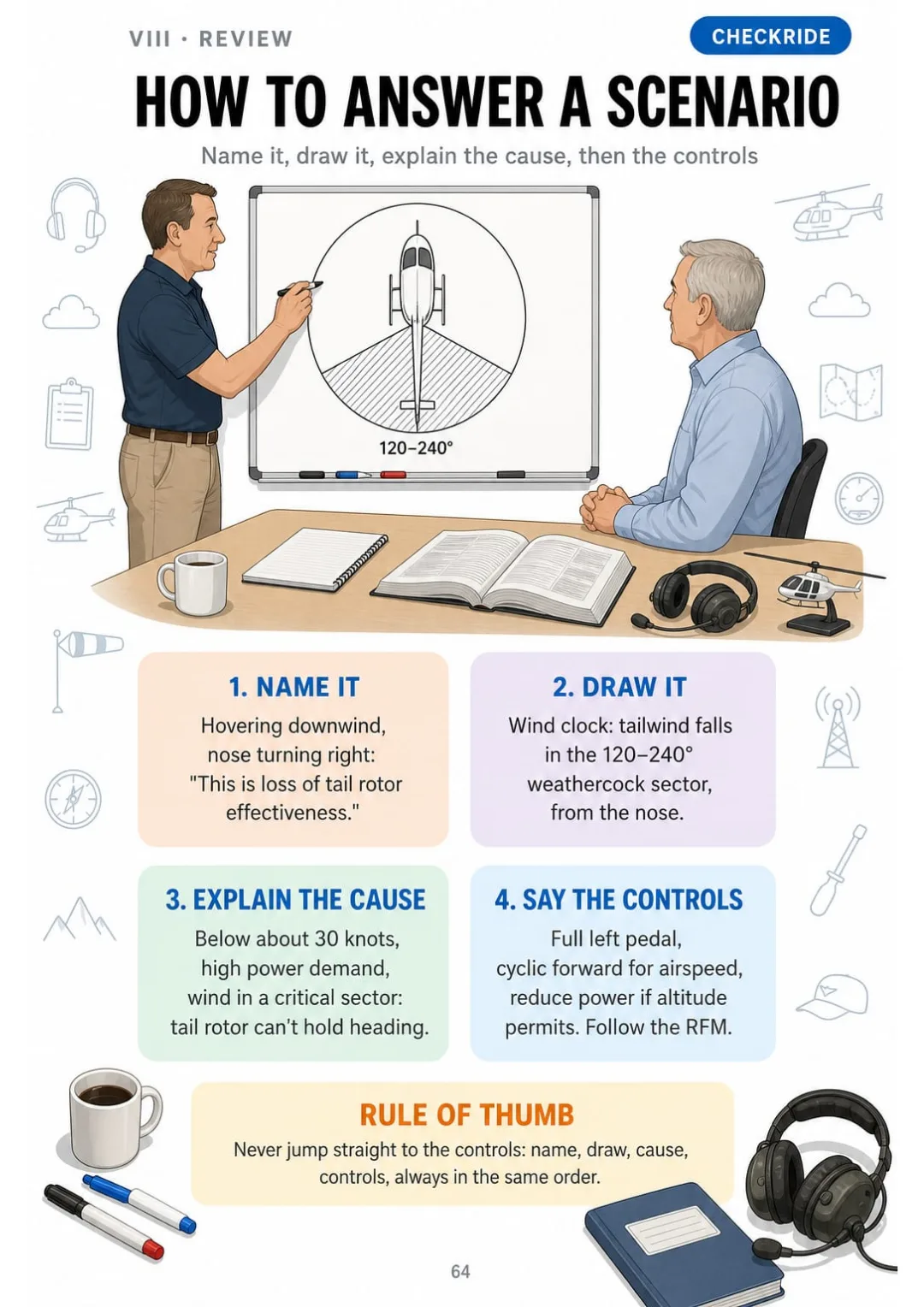
Worked oral scenario: downwind hover near a building, nose turns right → LTE in 4 steps

Swipe to see more →

These are real pages from the book. The table of contents is the full one: 8 parts and 61 topics.

The Problem Isn't You. It's How It Was Explained to You.

You're on the pad. Your instructor asks why the helicopter needs less power in a three-foot hover than at fifty feet, and the answer you studied last night won't come.

The handbook covers ground effect in paragraphs: downwash, tip vortices, induced flow, the airflow near the surface. All words, nothing to picture when someone is waiting for you.

Ground effect: within about one rotor diameter, less induced flow and less power to hover.

In this book, ground effect is one page: two rotor discs side by side, IGE and OGE. The induced-flow arrows are drawn shorter close to the ground, and the box says it plainly: within about one rotor diameter, less power to hover.

The same goes for translating tendency, ETL, transverse flow, dynamic rollover and settling with power: each one has its own page, drawn right on the disc.

Next time the question comes, you picture the page and explain it, without going back to the handbook.

COMPARE FOR YOURSELF

Same Topic, Two Ways to Study It

THIS
  • The handbook: line after line
  • Pitch angle and angle of attack explained only in words
  • You walk into the test still unsure
The pitch angle of a rotor blade is defined as the angle between the chord line of the airfoil and the reference plane established by the main rotor hub, or plane of rotation. It is varied by the pilot through the collective and cyclic controls by means of the swashplate assembly. The angle of attack, by contrast, is the angle between the chord line and the resultant relative wind, which is a function of rotational relative wind and induced flow; consequently, angle of attack may differ from pitch angle under varying flight conditions.
FOR THIS
  • Pitch angle and angle of attack in one drawing
  • The two reference lines labeled in a box
  • One drawing you can redraw on the whiteboard at the oral
Coriolis effect: blade flaps up, center of mass moves in, blade speeds up.
CONTENTS

Take a Look at the 8 Parts and 61 Topics

The helicopter and its controls, rotor aerodynamics, hover and forward flight, autorotation, the big hazards, performance and weight & balance, regulations and instrument flying, and a test-day review: 65 pages, all illustrated.

IThe Helicopter and Its Controls · pp. 5-11
  1. How to Use This Book: What Happens → Why → What the Pilot Does
  2. Anatomy of a Helicopter
  3. The Collective: Pitch and Power Together
  4. The Cyclic: Tilting the Disc
  5. The Pedals: Anti-Torque and Heading
  6. Anti-Torque Systems Compared
  7. Main Rotor Systems: Fully Articulated, Semirigid, Rigid
IIRotor Aerodynamics · pp. 12-20
  1. The Blade as an Airfoil: Chord, Pitch and Angle of Attack
  2. Rotational Relative Wind and Induced Flow
  3. Total Aerodynamic Force: Lift, Thrust and Drag on the Disc
  4. Three Kinds of Drag: Profile, Induced, Parasite
  5. Gyroscopic Precession: the 90° Rule
  6. Coriolis Effect: Blades That Speed Up and Slow Down
  7. Coning
  8. Dissymmetry of Lift
  9. Blade Flapping and Blowback
IIIHover, Takeoff and Forward Flight · pp. 21-28
  1. Ground Effect: IGE vs OGE
  2. Translating Tendency
  3. Effective Translational Lift (ETL)
  4. Transverse Flow Effect
  5. Hovering: Controls Working Together
  6. Normal Takeoff and Climbout
  7. Normal Approach and Steep Approach
  8. Vibrations: Low, Medium and High Frequency
IVAutorotation · pp. 29-34
  1. What Autorotation Is
  2. The Three Blade Regions: Driven, Driving, Stall
  3. Entry: Collective Down, Pedal, Cyclic
  4. Steady-State Descent: Managing Rotor RPM
  5. Flare, Cushion and Touchdown
  6. Power Recovery and Autorotation with a Turn
VThe Big Hazards · pp. 35-44
  1. The Height-Velocity Diagram
  2. Settling with Power (Vortex Ring State)
  3. Settling with Power: Recovery
  4. Dynamic Rollover
  5. Dynamic Rollover: Prevention and Recovery
  6. Retreating Blade Stall
  7. Loss of Tail Rotor Effectiveness (LTE)
  8. LTE: Recognition and Recovery
  9. Low G and Mast Bumping
  10. Low Rotor RPM and Ground Resonance
VIPerformance, Weight & Balance, Systems · pp. 45-51
  1. Density Altitude: Hot, High, Humid
  2. Reading a Hover IGE/OGE Chart
  3. Weight & Balance: Weight × Arm = Moment
  4. Longitudinal CG: Worked Example
  5. Lateral CG: Why Helicopters Care
  6. Engine and Fuel System: Piston vs Turbine
  7. Carburetor Icing
VIIRegulations, Airspace and Instrument · pp. 52-59
  1. Certificates and Experience: Private, Commercial, Instrument
  2. VFR Weather Minimums for Helicopters
  3. Minimum Altitudes and Fuel Reserves
  4. Inspections, Documents and Airworthiness
  5. Instrument Flying: The Helicopter Differences
  6. IFR Alternates and Approach Minimums for Helicopters
  7. Copter Approaches and Point-in-Space Procedures
  8. Knowledge Test Format: PRH, CRH, IRH
VIIIReview: Test Day and Checkride Oral · pp. 60-65
  1. Redraw-from-Memory Sheet: the 6 Drawings for the Oral
  2. Frequent Mix-Ups: Pairs People Confuse
  3. Hazards at a Glance: Cause, Warning, Recovery
  4. Emergency Procedures in Order
  5. Checkride Oral: How to Answer a Scenario
  6. Last-Week Checklist

One Page, One Topic, All Clear

Think of it this way:

Checkride oral. The examiner asks what happens to the advancing and retreating blades in forward flight, and you have to draw it, not recite it.

In the book, you open the dissymmetry of lift page: the disc seen from above, airspeed added on the advancing side, subtracted on the retreating side, and blade flapping drawn as the fix.

H/V diagram: the shaded areas, low and slow and fast and low, are where autorotation may fail

Same with ETL, autorotation, dynamic rollover, LTE and weight and balance: each one on its own page, with the recovery in numbered steps.

Helicopter Pilot Illustrated is 8 parts and 61 topics, all drawn, and at the end, a review with the 6 drawings for the oral.

What you see drawn, you don't have to memorize.

What's Inside Helicopter Pilot Illustrated:

Ipp. 5-11

The Helicopter and Its Controls

How to use the book, the parts of a helicopter, the collective, cyclic and pedals, anti-torque systems and the three main rotor systems.

IIpp. 12-20

Rotor Aerodynamics

The blade as an airfoil, relative wind and induced flow, the forces on the disc, drag, the 90° rule, Coriolis, coning, dissymmetry of lift and blowback.

IIIpp. 21-28

Hover, Takeoff and Forward Flight

Ground effect, translating tendency, ETL, transverse flow, hovering, takeoff, normal and steep approaches, and vibrations.

IVpp. 29-34

Autorotation

What autorotation is, the three blade regions, entry, rotor RPM in the descent, flare and touchdown, power recovery and turns.

Vpp. 35-44

The Big Hazards

The H/V diagram, settling with power, dynamic rollover, retreating blade stall, LTE, low G and mast bumping, low rotor RPM and ground resonance.

VIpp. 45-51

Performance, Weight & Balance, Systems

Density altitude, hover IGE/OGE charts, weight and balance with worked CG examples, piston vs turbine and carburetor icing.

VIIpp. 52-59

Regulations, Airspace and Instrument

Certificates and hours, VFR minimums, altitudes and fuel, inspections and documents, helicopter IFR, Copter approaches and the knowledge test format.

VIIIpp. 60-65

Review: Test Day and Checkride Oral

The 6 drawings to redraw from memory, frequent mix-ups, hazards at a glance, emergency procedures in order, oral scenarios and a last-week checklist.

At the end of the book: A review section with the 6 drawings for the oral, frequent mix-ups and emergency procedures in order.
Plus: 2 Free Books

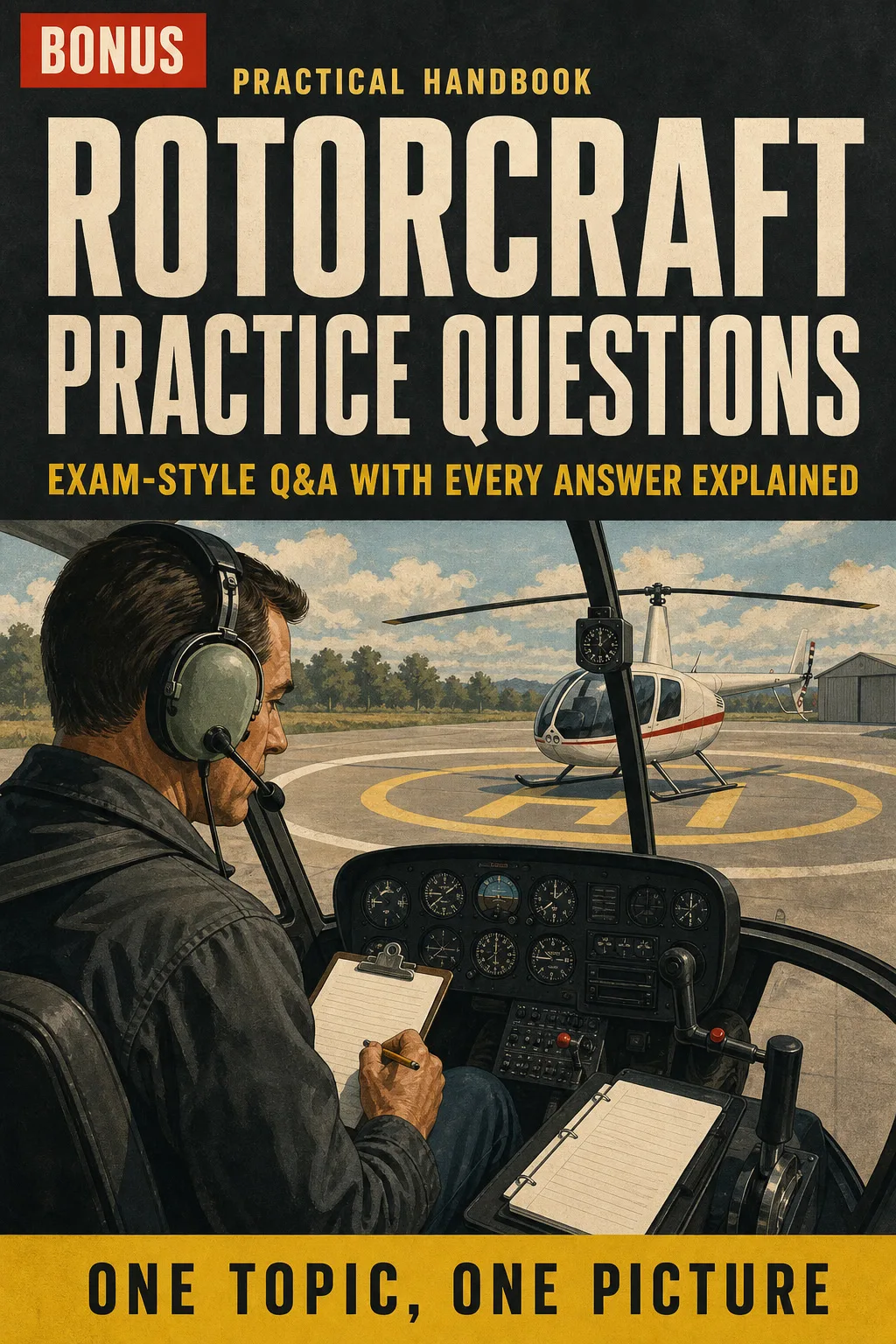
Rotorcraft Practice Questions: Exam-Style Q&A with Every Answer Explained

BONUS 1: «Rotorcraft Practice Questions: Exam-Style Q&A with Every Answer Explained»

Value on its own: US$ 17.90

Test yourself topic by topic in the knowledge-test format and see exactly why each wrong option is wrong, with a pointer to the page that explains it.

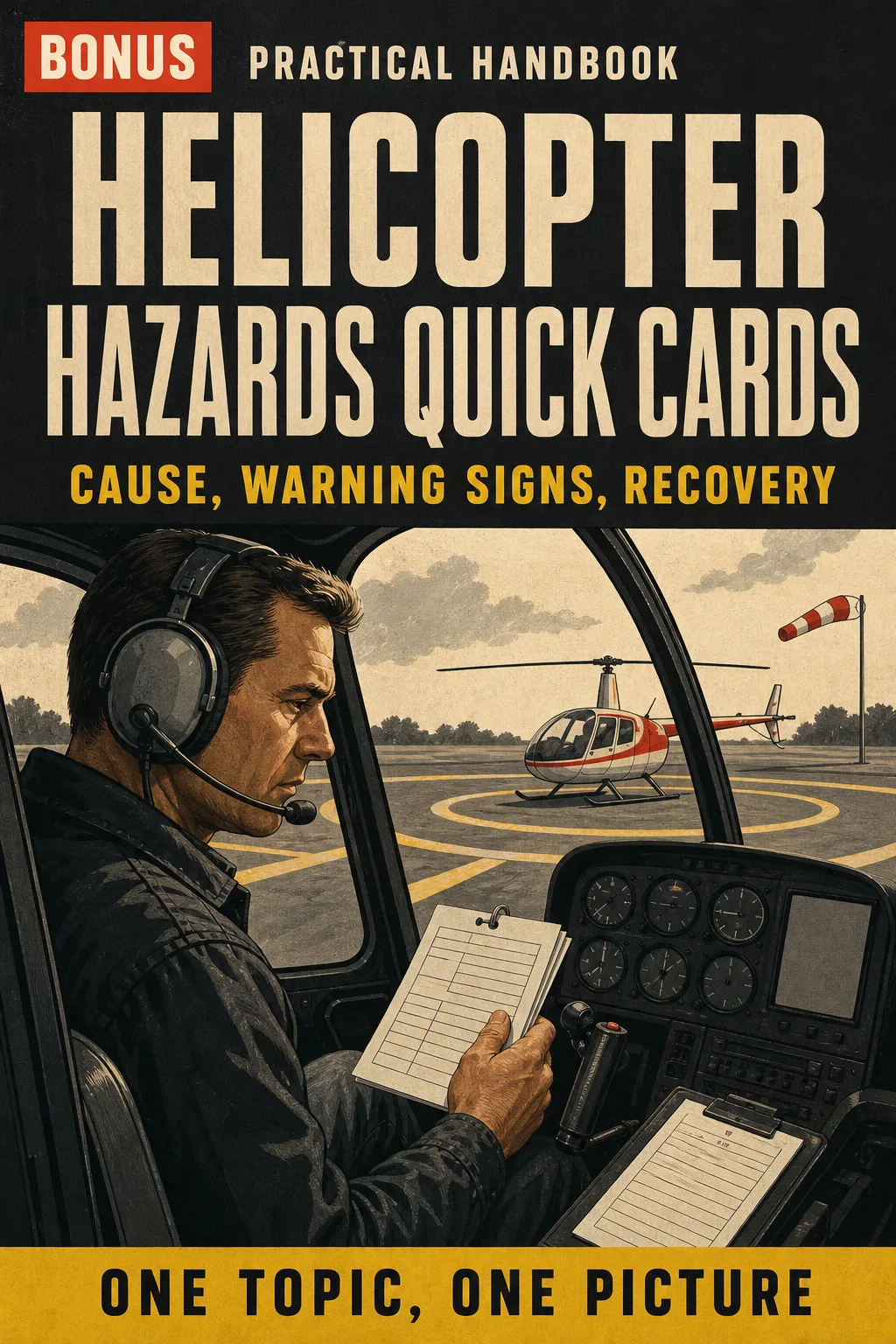
Helicopter Hazards Quick Cards: Cause, Warning Signs, Recovery

BONUS 2: «Helicopter Hazards Quick Cards: Cause, Warning Signs, Recovery»

Value on its own: US$ 14.90

Dynamic rollover, settling with power, retreating blade stall, low G, low rotor RPM and LTE, each on one printable card you can review in the car before your lesson.

Helicopter Pilot Illustrated with 2 Free Books

  • Helicopter Pilot Illustrated: 65 illustrated pagesUS$ 63
  • BONUS 1: Rotorcraft Practice Questions: Exam-Style Q&A with Every Answer ExplainedUS$ 17.90
  • BONUS 2: Helicopter Hazards Quick Cards: Cause, Warning Signs, RecoveryUS$ 14.90
  • High-resolution PDF to printIncluded
Total value US$ 95.80
YOUR PRICE:
US$ 27
You save US$ 68.80
YES, I WANT HELICOPTER PILOT ILLUSTRATED FOR US$ 27

📄 This is a digital PDF book sent to your email: nothing is printed or shipped.

Secure purchaseEncrypted payment30-day guarantee

PDF by email: We email you Helicopter Pilot Illustrated as a PDF, together with the two free books. It's a single payment: no installments, no extra charges.

Who This Book Is For

You're working on your private

You're working on your private

Each concept from ground school on its own page, drawn, so the handbook chapters finally connect after a long workday.

Your test or checkride is close

Your test or checkride is close

A fast review in the same order every time, plus the 6 drawings you can rehearse on paper before the oral.

You're going for commercial, instrument or CFI

You're going for commercial, instrument or CFI

The hazards and aerodynamics you have to explain to an examiner or a student, laid out as drawings you can redraw on a whiteboard.

Everything You Get Today

US$ 95.80US$ 27
YES, I WANT HELICOPTER PILOT ILLUSTRATED FOR US$ 27

📄 This is a digital PDF book sent to your email: nothing is printed or shipped.

30DAYS
GUARANTEE

30-Day Guarantee

Try Helicopter Pilot Illustrated for 30 days, bonus books included.

We refund everything if the file won't open, if the book isn't what you see here, if you were charged twice or if the email doesn't arrive. Just email us.

You pay once. No subscriptions.

Frequently Asked Questions

Is it for me if I'm working toward commercial or instrument, not private?

Yes, with one honest note. Aerodynamics, hazards, performance and weight and balance apply to every rating, and the commercial oral goes deeper on exactly those. For instrument, Part VII covers the helicopter-specific side (helicopter IFR rules, Copter approaches); it isn't a full instrument ground course on charts, weather and procedures. If you're starting private, it works from page one.

Where does the content come from?

From the FAA Helicopter Flying Handbook (FAA-H-8083-21B), the Pilot's Handbook of Aeronautical Knowledge (FAA-H-8083-25), the current Helicopter ACS for private, commercial and instrument, the AIM and 14 CFR Parts 61, 91 and 97, checked against the current editions. Performance and H/V charts are generic examples: always use your helicopter's POH/RFM.

Is it official material?

No. It's independent study material, not published or approved by the FAA. It doesn't give you a certificate or the endorsement to take the knowledge test: that still comes from your CFI or ground school.

Does it replace ground school or my CFI?

No. It sits next to them. Your app trains the answers and ground school gives you the lecture; this book gives you one drawing per concept, so you can explain the why out loud or on a whiteboard. It doesn't replace instruction from a CFI, your helicopter's POH/RFM or the current regulations.

Are the practice questions the ones on the test?

No. They're written for this book in the knowledge-test style, each with the answer explained. They aren't official test questions.

How do I get it?

The book and both bonuses come as a PDF by email, sent to the address you enter at checkout.

Do I have to pay every month?

No. It's a one-time payment.

Can I have it on paper?

Yes. It's a printable PDF: print it and take it to the hangar or keep it in your flight bag.

How does the refund work?

You have 30 days. We refund everything if the file won't open, if the book isn't what you see on this page, if you were charged twice or if the email doesn't arrive: just email us.

Before You Close This Page

No more rereading the handbook with nothing sticking.

Ground effect, dissymmetry of lift, the H/V diagram: you see them drawn, and they stick.

You walk into the test and the oral knowing where everything is.

Drawings make studying faster.

The book is right below.

One-time payment: US$ 27 · Guarantee: 30 days · PDF by email

YES, I WANT HELICOPTER PILOT ILLUSTRATED FOR US$ 27

📄 This is a digital PDF book sent to your email: nothing is printed or shipped.